Paris Churches
History in Stone
Paris Churches by Arrondissement
There are churches in every neighborhood of Paris. Few visitors leave without having seen either the Notre Dame de Paris on the Ile de la Cité or the Basilica of Sacré Coeur on top of Montmartre.
The earliest known example of Paris Churches was actually built before Paris was Paris.
While the city was Roman and known as Lutetia (Lutèce in French), there was built a Temple to Jupiter. On these foundations a church to Saint Etienne was later built which is actually the spot where Notre Dame cathedral now stands.
The ruins of these and other ancient constructions can be visited in the Crypt of the Notre Dame.
With the spread of Christianity, many Paris churches were built by the Merovingian and Carolingian kings, though little remains of those today.
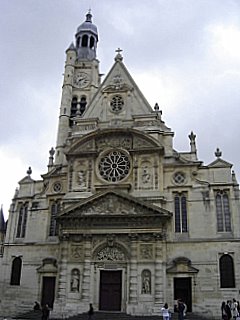
When Clovis I made Paris his capital in the middle of the 6th century, he built the abbey of Saints Peter and Paul on Mount Ste. Geneviève, where now stands the Panthéon and the church of St. Etienne du Mont.
The historic Paris Churches can be a mixture of architectural styles, mostly Romanesque and Gothic. Some excellent examples of Gothic architecture are the churches of this city, including Sainte Chapelle, considered one of the world's finest constructions of Gothic architecture.
The churches of Paris offer the visitor a unique perspective on art, architecture and history.
Many of the churches in Paris house some stunning and priceless art treasures.
There are wood carvings in the pulpits, frescoes and murals on chapel walls and ceilings, sculptures and paintings from recognized masters and, of course, stained glass.
If you are interested in the history of churches in Paris, take a look at this very interesting book.
"The aim of all churches in Paris is to be a place of visitation, welcoming tourists and passers-by; a haven of peace, beauty and hospitality, rich in history.
Their accessibility, and the willingness of the men and women who maintain the churches and greet visitors speak softly of God's goodwill to the hearts of those who accept to enter His house.
But they also express the church's esteem for for those who venture in, coming just as they are, with their own lives, their questions, their richness, their world. In that hospitable relation between church and visitor, how can we fail to recognize each other?
We are certain that a new Word is born of each encounter and that the guest leaves the church stronger and beautified."
Isabelle Renaud-Chamska President of Art, Culture and Faith, Paris
There are over thirty memorable and historically significant churches in Paris. None of them charge an entrance fee.
Most function as parish churches and places of worship.
Because of this, there are a few things that should be kept in mind:
- Be properly dressed. It may restrict your entrance.
- Churches are places of quiet and reflection. Keep your conversation to a minimum, your volume down.
- Got a cell phone? Turn it off or put it on silent mode.
- Paris churches have an area reserved for those wishing to pray. Be aware of this and respect that area.
- The sanctuary, the area of the main altar, is usually off limits.
- Most side chapels in the churches have stands holding votive candles. Feel free to light one in memory of a friend or loved one, or simply as a reminder of a quiet moment. Don't forget to leave your offering in the collection box.
- If the church is a Catholic Church, there will be an area where the sacrament is kept. These days, it is usually a side altar and there will be a small votive candle burning.
Many of these Paris churches have long histories and have played essential roles over the centuries. They may become among your favorite places to visit.
Paris Churches by Arrondissement
1er Arrondissement
2eme Arrondissement
3eme Arrondissement
- Saint Denis du Saint Sacrement
- Sainte Elisabeth
- Cathedrale Sainte Croix des Armeniens
- Saint Nicolas des Champs
4eme Arrondissement
- Notre Dame de Paris
- Saint Gervais-Saint Protais
- Saint Louis en Ile
- Saint Merri
- Eglise de Reformee du Marais
- Eglise Lutherienne des Billettes
- Notre Dame des Blancs Manteaux
- Saint Paul-Saint Louis
5eme Arrondissement
- Eglise de la Sorbonne
- Saint Etienne du Mont
- Saint Julien le Pauvre
- Saint Jacques du Haut Pas
- Saint Nicolas du Chardonnet
- Saint Severin
- Val de Grace
6eme Arrondissement
- Saint Germain des Prés
- Saint Joseph des Carmes
- Saint Sulpice
7eme arrondissement
- Basilique Clotilde
- Saint Francois Xavier
- Saint Thomas d'Aquin
- Chapelle de l'Epiphanie
- Saint Louis des Invalides
8eme Arrondissement
- Chapelle Expiatoire
- Saint Augustin
- Saint Louis-d'Antin
- Saint Philippe du Roule
- Saint Andre de l'Europe
- Cathedrale Americaine
- Sainte Marie Madeleine
9eme Arrondissement
- Notre Dame de Lorette
- Saint Eugene et Sainte Cecile
- Sainte Trinity
- Chapelle Sainte Rita
10eme Arrondissement
- Saint Laurent
- Saint Joseph Artisan
- Chapelle de l'Hopital Saint Louis
- Saint Vincent de Paul
11eme Arrondissement
- Notre Dame d'Esperance
- Saint Ambroise
- Sainte Marguerite
- Notre Dame du Perpetuel Secours
12eme Arrondissement
- Notre Dame de Bercy
- Saint Esprit
13eme Arrondissement
- Notre Dame de la Grace
- Chapelle Notre Dame de la Sagesse
- Sainte Anne de la Butte aux Cailles
- Saint Hippolyte
14eme Arrondissement
- Notre Dame du Travail de Plaisance
- Saint Pierre de Montrouge
- Saint Dominique
- Notre Dame de Rosaire
15eme Arrondissement
- Notre Dame de la Salette
- Saint Christophe de Javel
- Notre Dame de l'Arche d'Alliance
- Saint Antoine de Padoue
- Saint Jean Baptiste de Grenelle
- Saint Jean Baptiste de la Salle
- Saint Leon
- Saint Lambert de Vaugirard
16eme Arrondissement
- Notre Dame d'Auteuil
- Saint Pierre de Chaillot
- Saint Francois de Molitor
- Sainte Jeanne de Chantal
- Saint Honore d'Eylau
- Chapelle Sainte Therese
17eme Arrondissement
- Saint Michel et Sainte Marie des Batignolles
- Sainte Odile
- Saint Charles de Monceau
- Saint Ferdinand des Ternes
- Notre Dame de la Compassion
18eme Arrondissement
- Basilica of Sacre Coeur
- Saint Jean de Montmartre
- Saint Bernard de la Chapelle
- Notre Dame de Bonne Conseil
- Saint Denys de la Chapelle et Sainte Jean d'Arc
- Saint Pierre de Montmartre
19eme Arrondissement
- Saint Jacques et Saint Christophe
- Notre Dame des Buttes Chaumont
- Saint Luc
- Saint Francois d'Assise
20eme Arrondissement
- Saint Germain de Charonne
- Saint Jean Bosco
- Notre Dame de la Croix
Return to Top of Paris Churches
Return to Paris Walking Tours Home Page
Private Tours
| Paris Introduction Tour | Paris Islands Tour | Paris Passages Tour |
| Trocodero-Eiffel-Invalides | Marais Tour | Montmartre Tour |
| Latin Quarter Tour | Paris Markets Tour | Paris Churches Tour |
Booking.com

New! Comments
Have your say about what you just read! Leave me a comment in the box below.