Parc de la Butte du Chapeau Rouge
Not On The Tourist Trail
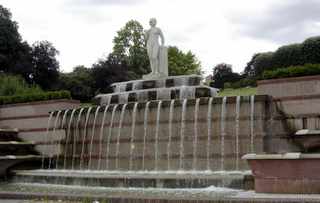
Parc de la Butte du Chapeau Rouge
Metro: Pré Saint Gervais
Arrondissement: 19eme
Go Here For Hotels In This Area
Map of the Area
The Parc de la Butte du Chapeau Rouge, the Park of the Butte of the Red Hat, gets its name from an old tavern in the area. The park covers 46,880 square meters and is situated on the slope of a hill, offering an excellent view of eastern Paris.
The park was designed in 1939 by Léon Azéma in the neo-classic style typical of the 1930s. It was Léon Azéma, along with two other architects, Jacques Carlu and Louis-Hippolyte Boileau, who designed the Palais de Chaillot two years earlier, in 1937.
The Parc de la Butte Chapeau Rouge is not the most popular of parks in Paris due to its location on the eastern edge of the city and bordered by a large auto-route.
Nevertheless, it has many features that make this a lovely park to visit.

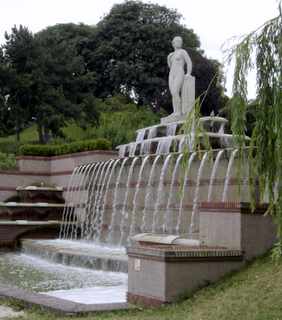
There are three notable sculptures in the Parc de la Butte du Chapeau Rouge.
At the main entrance stands the stone sculpture, "Eve", created by Raymond Couvègnes in 1938. The sculpture stands in a fountain.
There is the sculpture created by Pierre Traveres, also in 1938, called "Deux Femmes et un Enfant" (Two Women and a Child).

The most recent sculptural addition to this park is made of marble and entitled "Both", created by the Belgian sculptor Eugene Dodeigne in 1990.
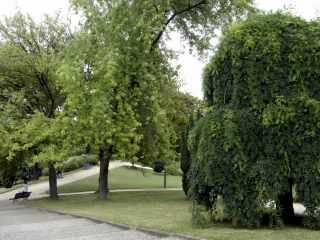
There are many remarkable trees in the park such as a Sophora and a Gingko Biloba, a tree with pre-historic origins from the Orient. There are also tulip trees and a Giant Sequoia.
In the 19th century, the Parc de la Butte Chapeau Rouge was part of a large network of gypsum quarries in the 19th arrondissement, as was the Parc des Buttes Chaumont. The quarries had the nick-name of "the quarries of America" because these quarries shipped gypsum, plaster, to America. Hence the name, "Plaster of Paris".
Return to Top of Parc de la Butte du Chapeau Rouge
Private Tours
| Paris Introduction Tour | Paris Islands Tour | Paris Passages Tour |
| Trocodero-Eiffel-Invalides | Marais Tour | Montmartre Tour |
| Latin Quarter Tour | Paris Markets Tour | Paris Churches Tour |
Booking.com

New! Comments
Have your say about what you just read! Leave me a comment in the box below.